
Free Trial for 2 Days
Learn about Islamic beliefs online, from the basics to the the most recent information.
A lot of Muslims know what they believe, but they don’t know why it matters. This can cause people to be confused, have doubts, or do things without really understanding them. Our Islamic Beliefs classes give you a clear, structured way to learn about Aqeedah. They start with the pillars of Iman and go on to talk about Allah’s attributes, prophethood, and the unseen. Each lesson shows you how faith affects your actions in everyday life and in worship. You also learn how to tell the difference between real teachings and common mistakes. You will be able to explain, defend, and live your faith with confidence by the end. Islamic beliefs become useful, clear, and very important.
What is Islamic Beliefs Online Classes
It is not: A series of vague “faith talks” or recycled Friday sermon points.
It is: A graded, oral, and written exploration of Islamic theology taught through live, teacher-led online sessions. You will study classical texts in simplified form (such as Aqeedah al-Tahawiyyah adapted for English speakers or Usool al-Thalatha), memorise evidence from the Quran and authentic Sunnah, and learn to distinguish mainstream Sunni beliefs from innovations and deviations.
How it is taught online:
-
Live screen sharing with interactive slides showing creedal statements, proofs, and common errors.
-
Real-time Q&A so you ask “But what about...?” immediately.
-
Short written assignments (one paragraph) after each module to solidify definitions. After each module, students should write short assignments (one paragraph) to help them remember the definitions.
-
Oral revision sessions in which the teacher asks you to explain a belief in your own words.
This is for:
Adults (18+) who know a little bit about Islam but have never studied Aqeedah in a formal way.
-
Women learning from home who want structured, credible knowledge without travelling.
-
Teenagers (14–17) with parent supervision – the content is deep but age-appropriate with adjusted pacing.
-
Converts or returnees to Islam need a systematic, doubt-resistant foundation.
Who this is NOT for:
Absolute beginners who do not yet know the five pillars of Islam. They should learn basic Islam first. We will assess you with a short entry check.
Why Muslims Should Sign Up for Structured Islamic Beliefs Online Classes
akes away the confusion that comes from learning randomly or messily.
Provides a strong, evidence-based base for Aqeedah
Takes care of doubts before they become bigger issues.
Gives you direct access to qualified teachers who can help you and fix your mistakes
Well-organized lessons make sure that progress is steady. And all of you should hold on to Allah's rope tightly and not let it go... (Qur'an 3:103)
To get a stable, confident, and unshakable understanding of Islam, everyone needs to follow a set path.
What You'll Learn: A Seven-Module Progression That Focuses on Depth, Not Speed
Module 1: The First Foundation, What is Aqeedah and Why It Comes Before Action
What is being taught:
The linguistic and technical definition of Aqeedah, the distinction between knowledge-based certainty and uncritical imitation; the three classifications of Tawheed (Ruboobiyyah, Uloohiyyah, Asmaa wa Sifaat) elucidated with practical examples; the peril of discussing Allah without knowledge.
What you can do after:
Define Aqeedah accurately and differentiate it from Fiqh (jurisprudence) and Tazkiyah (cleansing). Identify the category of Tawheed that is transgressed in typical situations (e.g., swearing by entities other than Allah, requesting rain from graves).
Module 2: Allah’s Existence and Attributes – Beyond “God is There”
What is taught: Logical and scriptural proofs for Allah’s existence tailored for a modern, sceptical environment; the difference between dhaati (essential) and fi’li (action-based) attributes; detailed study of 12 key attributes (existence, oneness, eternality, power, will, knowledge, life, hearing, sight, speech, majesty, generosity) with evidence; common theological errors from Mu’tazilah and Ash’ari schools explained briefly so you recognise them without being confused.
What you will be able to do after:
-
Respond clearly if someone asks, “If Allah is all-powerful, can He create a stone He cannot lift?” (You will learn the correct answer based on impossibility of logical contradiction for Allah).
-
Recognise when a speaker is denying an established attribute of Allah and know why mainstream scholarship rejects that.
-
Make dua using Allah’s appropriate names for specific needs (e.g., using al-Jabbar for broken situations, al-Lateef for subtle relief).
Module 3: Angels, Books, and Messengers – The Unseen That Shapes Your Reality
What is taught: The necessity of believing in the unseen without exaggeration or denial; names and functions of major angels (Jibreel, Mika’eel, Israfeel, Malik, Ridwan, Munkar, Nakeer, and the recording angels); the four revealed books (Tawrah, Injeel, Zabur, Quran) – what remains authentic, what changed, and why we follow only the Quran; the doctrine of prophethood – 25 names mentioned in Quran, the distinction between rasool and nabi, the finality of Muhammad ﷺ, and the error of believing any prophet can be prayed to.
What you will be able to do after:
-
Explain why Muslims do not believe the current Bible is fully preserved without being disrespectful.
-
Describe the two angels questioning in the grave accurately, without Hollywood-style embellishment.
-
Correct someone who says “all religions are the same” by showing distinct theological claims of Islam.
Module 4: The Last Day – From Grave to Garden or Fire (Detailed and Practical)
What is taught: The stages of the Hereafter in sequence: death, grave pressure and questioning (with correct understanding of punishment and blessing in barzakh), trumpet blasts, resurrection, gathering, book distribution, scales, bridge (siraat), intercession (shafa’ah) – who grants it and who receives it, paradise (its levels, inhabitants, eternal nature), hellfire (its severity, occupants, eternity for disbelievers). Emphasis on mutawaatir hadith descriptions without denying metaphorical elements where scholars differ.
What you will be able to do after:
-
Draw a simple timeline of akhirah events from death to final abode.
-
Distinguish between authentic intercession reports and exaggerated Sufi or folk claims.
-
Use the fear and hope of the Last Day to adjust one daily habit (e.g., leaving backbiting, increasing morning adhkar).
Module 5: Qadr (Divine Decree) – The Most Misunderstood Belief
What is taught: The four levels of belief in Qadr (Allah’s prior knowledge, writing in al-Lawh al-Mahfooz, His will, and His creation of actions); the fatalist error (using Qadr as excuse for sin) and the rejectionist error (denying Allah’s complete control); how Qadr coexists with human choice – a practical, non-philosophical answer; responding to tragedy without anger at Allah.
What you will be able to do after:
-
Respond to “If Allah wrote everything, why punish us?” with a clear, correct answer.
-
Stop saying “it was just my destiny” as a justification for skipping obligations.
-
Help a grieving friend avoid theological despair after loss of a child or livelihood.
Module 6: Companions, Saints, and Deviations – Protecting Your Creed in Community
What is taught: The obligation to love all Sahabah (companions) without exaggeration or cursing; the correct position on conflicts between companions (e.g., Ali and Mu’awiyah); what “sainthood” (wilayah) truly means in Islam – no infallibility, no supernatural powers independent of Allah; major deviations to recognise: grave worship, asking the dead for needs, believing in a “hierarchy of saints,” extremism (ghuluw) in praise of prophets or pious people.
What you will be able to do after:
-
Recognise when a local practice crosses into shirk (e.g., slaughtering for a saint, circling a grave for blessing).
-
Explain respectfully to a relative why Muslims do not celebrate birthdays of prophets or saints.
-
Love all companions without falling into sectarian rhetoric (Shia vs Sunni extremes).
Module 7: Living Your Creed – Certainty in Action
What is taught: How strong Aqeedah produces strong worship (khushoo, consistency, avoiding riya’); how it produces strong character (fearing only Allah, hoping only in Him, patience in trials); how it produces strong community (loyalty to believers, disavowal of clear disbelief without becoming extremist); reviewing the entire course with a final oral assessment where you explain any belief on the spot.
What you will be able to do after:
-
Lead a family discussion on Islamic beliefs with confidence and evidence.
-
Recognise and reject modern pseudo-theological movements (e.g., Quranists, extreme secularists pretending to speak for Islam).
-
Register for advanced Aqeedah courses (on theological heresies, comparative religion) with a solid base.
Our Teaching Methodology
Live Sessions One-on-One
A teacher who is only interested in helping you understand
No pressure from others, ask questions, and learn at your own pace
Learning in a structured, step-by-step way
Start with the pillars of Iman.
Advance in understanding Allah's attributes, Prophethood, and the unseen.
Regular Testing
Regular tests to make sure you understand, not just memorize
Direct, clear feedback after each session
Learning by doing
Discussions based on concepts to improve understanding
Connections to real life that make beliefs useful, not just ideas
Scheduling that works for you
Pick times that work with your schedule.
You can take classes every day of the week, from morning to night.
Course Details
| Category | Details |
|---|---|
| Course Length | 3 to 6 months (depending on how fast the student learns) |
| Class Schedule | Five days a week (Monday to Friday) |
| Session Duration | 30 minutes per class |
| Class Type | Live Online 1-on-1 |
| Teachers Available | Male and Female teachers available |
| Age Group | Kids (18+) and Adults |
| Languages | Urdu, English, or Arabic |
| Certificate | Yes, provided after course completion |
| Free Trial | Two days free trial |
Why You Should Pick Al-Huda Digital Solutions
We're not just another site for online learning. At Al Huda Digital Solutions, our goal is to be honest, easy to reach, and give people power.
Teachers who are qualified and caring—trained in Quranic sciences and ways that are good for kids
Fees that are fair and have a purpose—your payment helps pay for a child's education who can't afford it.
No outside funding or donations—we only use tuition to pay for girls' free education at Madrasa Khadija-tul-Kubra.
Flexible schedules: classes are offered every day of the week, from morning to night.
Free trial class: Try out our way of teaching before you sign up.
Focus on empowerment: We help women and girls learn and make money from home.
You are not just learning the Quran when you choose us. You are joining a legacy that makes a difference in people's lives.
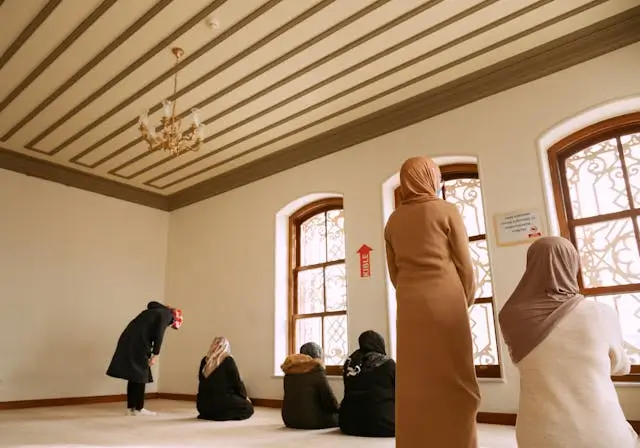
What a Typical Online Islamic Beliefs Class Looks Like
Every session is live, one-on-one, and highly interactive. Our teachers do not just lecture; they listen, correct, and encourage. Here is what happens in a standard class
Structure of the Class:
5 minutes: Go over what we learned last time
15 minutes: New lesson with practice with help
5 minutes: Questions, corrections, and comments
5 minutes: Homework
How We Teach:
Teacher explains a key Aqeedah idea using evidence from the Qur'an.
The student listens, thinks, and takes part.
The teacher clearly explains each step.
Students answer questions and show what they know.
The teacher corrects mistakes right away.
You have homework to do for the next session.
Who Should Sign Up for This Class?
Young Adults and Teens
-
Get a strong foundation in Aqeedah early on
-
Know why you believe what you do, not just what to believe.
-
Use structured knowledge to deal with doubts and confusion.
Adults (Newbies)
-
Begin with the fundamental tenets of Islamic faith.
-
Instead of relying on bits and pieces of information, learn in a systematic way.
-
Make your understanding of Iman and its parts stronger
Moms and Dads
-
Get ready to teach your kids the right beliefs.
-
Find and stay away from common mistakes
-
Make your home a place where people believe strongly.
Reverts (New Muslims)
-
Get a clear and real look at Islamic beliefs
-
Learn basic ideas like Tawheed, Prophethood, and the Hereafter
-
Get structured help to boost your faith and confidence.
Flexible Class Schedule (Available Around the World)
USA and Canada: Slots are open every day of the week in the early morning, afternoon, evening, and late at night.
UK and Europe: Sessions are available in the morning, afternoon, and evening, seven days a week.
Middle East: Classes are available all day, five days a week.
Pakistan and India are open all day, five days a week.
Australia and New Zealand: Sessions are available in the morning, afternoon, and evening, five days a week.
Individualized Learning Plan
Pick a schedule that works for you, whether it's 2, 3, 4, or 5 classes a week, depending on your goals and how much time you have.
Start in a few minutes
We have made it easy for you to start learning. Just do these three things:
Step 1
Choose Your Course
Check out our selection of online Quran and Islamic courses, Noorani Qaida programs, Tajweed classes, and professional Islamic studies. Choose the course that will help you reach your learning and spiritual goals.
Step 2
Register Online
Use our easy registration form to apply right away. Give us your information, and our system will find the right teacher for you. Get immediate confirmation and clear instructions on how to get started.
Step 3
Learn & Grow
You can start learning at home at your own pace. Get structured lessons, one-on-one live classes, interactive exercises, and expert help with reading the Quran, learning Tajweed rules, and learning about Islam.
Complete Your Journey with Al-Huda Digital
Your Quran learning journey is just the beginning. At Al-Huda Digital, we believe in holistic development.
Need Guidance? Try Our Counseling Services
Life comes with challenges. Our professional Islamic and psychological counseling services provide support for:
-
Stress, anxiety, and depression
-
Marriage and family issues
-
Spiritual guidance
-
Parenting challenges
*Get 1-on-1 confidential sessions with qualified counselors.*
Want to Earn from Home? Learn Digital Skills
Turn your knowledge into income. Our digital skills courses help you:
-
Start freelancing and earn online
-
Build websites and design graphics
-
Learn SEO and social media marketing
-
Start your own online business
Perfect for students, housewives, and graduates.
Frequently Asked Questions
Our Frequently Asked Questions section is designed to give you clear and simple answers about learning the Quran, Islamic studies, and online education. Many students and parents ask about our courses, teaching methods, fees, and how to get started.
Here you’ll find short, easy-to-read answers to common questions, whether you're a parent looking for Quran classes for your child, an adult beginner wanting to learn Tajweed, or someone interested in Islamic studies.
Yes, with one condition: You must already know the five pillars of Islam and the six pillars of Iman as basic terms. If you cannot list them, take our free “Islam Essentials” mini-course first (3 sessions). Module 1 of this course assumes you have heard the terms but never studied them in depth.
Yes. Request a female teacher during enrolment. Availability depends on time zone – we have female Aqeedah instructors for US evening, UK morning, and Malaysia time zones. Male teachers are all qualified (ijazah in Aqeedah texts) and classes are conducted professionally with no unnecessary mixing.
None. All slides, worksheets, and summarised text excerpts (from Aqeedah al-Tahawiyyah with commentary) are provided as PDFs. You will need to print or annotate digitally. We do not require you to purchase classical books, though we recommend titles for further reading.
Yes – specifically regarding: atheist arguments against Allah’s existence, Christian missionary claims about scripture, secular objections to prophethood, and common Sufi or folk deviations. You will not become a theologian, but you will have structured answers. Module 5 (Qadr) and Module 6 (deviations) focus heavily on modern application.
Yes. Students receive a completion certificate after successfully finishing the course.