
2-Day Free Trial
Help Your Child Memorise Daily Duas Correctly. Online Course for Kids (Ages 5–12)
Most children learn duas by repetition alone. They memorise the sound but not the meaning. They rush through words without proper pronunciation. Within weeks, they forget what they learned. This course solves that. Your child will learn 25+ essential daily duas with correct Tajweed (at a child’s level), simple word-by-word meaning, and a revision system designed for young memory. Classes are 30 minutes, live, online, with a female or a male teacher who specialises in children’s Quranic education.
What Daily Duas for Kids Course Actually Is
Daily Duas for Kids is a live, teacher-led program that teaches children the specific duas for everyday actions: waking up, sleeping, eating, entering the bathroom, leaving the home, riding a vehicle, feeling afraid, sneezing, and more.
Unlike a general “learn duas” video series, this course follows a graded progression used in formal Islamic schools:
-
Phase 1: Short duas (3–5 words) with visual cues
-
Phase 2: Medium duas (1 line) with simple meaning integration
-
Phase 3: Longer duas with light Tajweed correction (harsh letters, madd, ghunnah)
Each dua is taught in a 30-minute live session using screen sharing, repetition, and real-time pronunciation correction. The teacher sees your child’s mouth movements and fixes errors immediately.
Who this is for:
-
Children ages 5–12 who can sit for 30 minutes
-
Beginners with no prior dua memorisation
-
Kids who already know Arabic letters (Qaida level) – recommended but not required
-
Families who want duas with meaning, not just rote repetition
This is not a general “Islamic studies” course. It focuses only on daily duas, taught the way Huffaz children learn, small, consistent, corrected.
Why Muslim Kids Need Structured Daily Duas Course
Mistake 1: Teaching duas like songs
Children learn the sound but pronounce letters wrong. Example: “Alhamdulillah” becomes “Hamdu-lillah” (dropping the ‘Al’). “Bismillah” loses the heavy ‘B’. These errors become habits. By age 10, correction takes 3x longer.
Our fix: Every dua is broken into syllables. Teacher models each sound. Child repeats. Error is corrected immediately, not after the class.
Mistake 2: No connection between dua and action
A child says “Bismillah” before eating but has no idea what it means. When meaning is absent, memorisation is weak. Within 3 months without practice, 70% of duas are forgotten.
Our fix: Every dua includes a simple, one-sentence meaning suitable for a child’s comprehension. Example: “Bismillah” = “I start in the name of Allah.” No long Tafseer. Just enough to anchor memory.
The consequence of ignoring this
By age 8, a child may know 15 duas but pronounce 10 incorrectly and understand none. By age 12, they rely on transliteration and feel disconnected from the Arabic. Correcting later requires unlearning – which is harder than learning correctly the first time.
This course prevents that entirely.
What You Will Learn (8 Modules – Built for a Child’s Memory Capacity)
Module 1: Morning and Evening Duas (Foundation)
-
What is taught: Dua upon waking up, dua when wearing clothes, dua when looking in the mirror, evening protection duas (short versions: “A’udhu bi kalimatillah…”)
-
What child can do after: Recite 4 morning/evening duas without prompting, with correct ‘A’udhu’ articulation
Module 2: Entering and Leaving the Home
-
What is taught: Dua when leaving home (“Bismillah, tawakkaltu ‘alallah”), dua when entering home, dua for entering the masjid (simplified)
-
What child can do after: Stop before the door, say the correct dua automatically, differentiate between exit and entry supplications
Module 3: Eating and Drinking (High-Frequency)
-
What is taught: Dua before eating, dua after eating, dua when forgetting to say Bismillah (child version), dua after drinking milk, dua when sneezing and responding
-
What child can do after: Apply the “forgetting” dua independently when they realise they ate without Bismillah
Module 4: Bathroom Manners (Essential for Correctness)
-
What is taught: Dua before entering bathroom, dua after leaving bathroom, correct pronunciation of “Ghufranaka” (heavy ‘Gh’, not ‘G’)
-
What child can do after: Recite both duas without mixing them up – a common error even in older children
Module 5: Sleeping and Waking (Night Routine)
-
What is taught: Dua before sleeping (simplified: “Bismikallahumma amutu wa ahya”), dua upon waking (second version), sneezing during sleep awareness
-
What child can do after: Recite sleeping dua correctly with the ‘Bismi’ madd (2-second elongation)
Module 6: Travel and Riding (For Car Journeys)
-
What is taught: Dua when boarding a vehicle (car, bus, bike), dua for travel protection (short: “Subhanalladhi sakhkhara…” – first line only)
-
What child can do after: Recite the travel dua without stopping between ‘Subhana’ and ‘Alladhi’ (connected correctly)
Module 7: Fear, Anger, and Difficulty (Emotional Duas)
-
What is taught: Dua when afraid (short: “Hasbunallah wa ni’mal wakeel”), dua when angry (seeking refuge from Shaytan – child version), dua when something difficult happens (“Qaddarallah”)
-
What child can do after: Recognise their own emotion and choose the correct dua without being told
Module 8: Revision and Real-Life Application (Consolidation)
-
What is taught: Mixed practice, teacher calls out a situation (“You are about to eat”), child responds with correct dua. Pronunciation audit for all 25+ duas.
-
What child can do after: Go through a full day (wake to sleep) and recall the appropriate dua for 90% of daily actions
Our Teaching Methodology
1-on-1 Live Sessions
Each child gets a dedicated teacher with full attention. No group classes—learning stays focused and personalized.
Step-by-Step Approach
Start with short, daily Duas and gradually move to memorization, pronunciation, and understanding their meanings.
Regular Assessment
Simple weekly check-ins to track memorization and understanding. Teachers give clear feedback after each session.
Interactive Learning
Use of visuals, repetition, and engaging activities to help kids remember Duas easily and enjoy the process.
Flexible Scheduling
Pick a time that suits your child’s routine. Classes are available 7 days a week, from morning to night.
Course Details
| Detail | Information |
|---|---|
| Length of Course | 3 to 6 months (depending on how fast the student learns) |
| Class Schedule | Monday to Friday (5 days a week) |
| Session Duration | 30 minutes per class |
| Type of Class | Live Online 1-on-1 |
| Teachers Available | Male and Female teachers |
| Age Group | Kids (4+) and Adults |
| Certificate Language | Urdu, English, or Arabic |
| Certificate Provided | Yes, after completion |
| Free Trial | 2 Days Free Trial |
Why Choose Al-Huda Digital Solutions
We're not just another site for online learning. We at Al Huda Digital Solutions believe in being honest, making things easy to get to, and giving people power. Teachers who are qualified and care about their students have learned about the Quran and how to teach kids in a way that is fun and interesting. Your payment goes to a good cause: it helps pay for the education of a child who can't afford it. We don't get any outside money or donations. The only thing that pays for free education for girls at Madrasa Khadija-tul-Kubra is tuition.
Flexible schedules: classes are available every day of the week, from morning to night.
Free trial class: Try out our teaching style before you sign up.
Focus on empowerment: We help women and girls learn and make money from home.
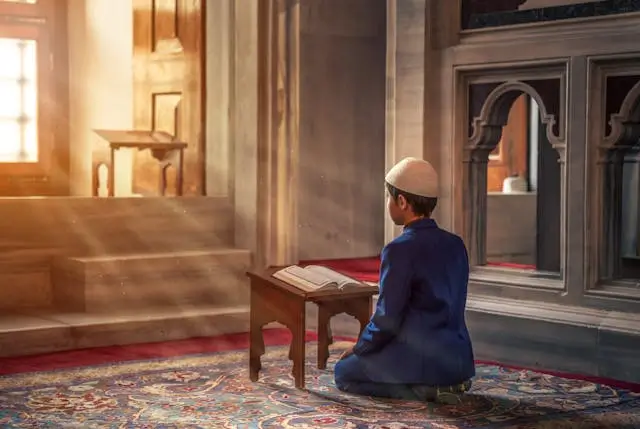
What a Typical Online Kids’ Duas Class Looks Like
Every session is live, one-on-one, and highly interactive. Our teachers do not just lecture; they listen, correct, and encourage. Here is what happens in a standard class
Class Structure:
5 min: Revision
10 min: New dua (reading + meaning)
5 min: Practice
5 min: Application
5 min: Feedback & homework.
How we Teach:
The teacher shows the students a screen with Arabic text, transliteration (only for the first two sessions), and simple picture cues, like a bed icon for the dua to sleep.
The teacher listens for heavy letters, madd length, and stopping rules (waqf) while the child reads.
Mistake → stop → teacher shows how → child repeats → fix → go on
Who Should Enroll in This Course?
Children (4 years and older)
-
Fun and interesting lessons for kids
-
Short sessions to keep people interested and help them remember things
-
Simple Duas taught clearly and with practice
For people who are just starting out (of any age)
-
Start with the most important things to do every day
-
Duas from the ground up
-
Step by step, learn how to say things right.
Dads and Moms
-
Teach your kids Duas.
-
Every day, make it a point to remember.
-
Give your kids the tools they need to practice and review without worry.
Reverts (New Muslims)
- A great way to start your daily prayers as a Muslim
- Learn some common Duas that people say every day.
- Believe in practicing and remembering them often.
Flexible Class Schedule (Global Availability)
USA / Canada – Early morning, afternoon, evening, and late-night slots available, 7 days a week.
UK / Europe – Morning, afternoon, and evening sessions available, 7 days a week.
Middle East – Classes offered throughout the day, 5 days a week.
Pakistan / India – Full-day availability, 5 days a week.
Australia / New Zealand – Morning, evening, and night sessions available, 5 days a week.
Custom Learning Plan
Choose a schedule that fits your routine: 2, 3, 4, or 5 classes per week based on your learning goals and availability.
Get Started in Minutes
We have made it simple for you to begin learning. Just follow these three steps:
Step 1
Choose Your Course
Take a look at our online Quran and Islamic courses, Noorani Qaida programs, Tajweed classes, and professional Islamic studies. Pick the course that will help you reach your spiritual and learning goals.
Step 2
Register Online
Fill out our simple registration form to apply right away. Fill out your information, and our system will match you with the right teacher. Get an instant confirmation and clear directions on how to start.
Step 3
Learn & Grow
You can learn at home at your own speed. Get help reading the Quran, learning Tajweed rules, and learning about Islam with structured lessons, one-on-one live classes, interactive exercises, and expert help.
Complete Your Journey with Al-Huda Digital
Your Quran learning journey is just the beginning. At Al-Huda Digital, we believe in holistic development.
Need Guidance? Try Our Counseling Services
Life comes with challenges. Our professional Islamic and psychological counseling services provide support for:
-
Stress, anxiety, and depression
-
Marriage and family issues
-
Spiritual guidance
-
Parenting challenges
*Get 1-on-1 confidential sessions with qualified counselors.*
Want to Earn from Home? Learn Digital Skills
Turn your knowledge into income. Our digital skills courses help you:
-
Start freelancing and earn online
-
Build websites and design graphics
-
Learn SEO and social media marketing
-
Start your own online business
Perfect for students, housewives, and graduates.
Frequently Asked Questions
Our Frequently Asked Questions section is designed to give you clear and simple answers about learning the Quran, Islamic studies, and online education. Many students and parents ask about our courses, teaching methods, fees, and how to get started.
Here you’ll find short, easy-to-read answers to common questions, whether you're a parent looking for Quran classes for your child, an adult beginner wanting to learn Tajweed, or someone interested in Islamic studies.
Yes, but with a note. The first 4 sessions are oral-only – no reading required. However, if your child cannot recognise Arabic letters at all, progress will be slower (16 weeks instead of 8). We recommend completing a Noorani Qaida course first, but it is not mandatory.
After Module 3 (approximately 6 sessions), your child will independently say eating, sleeping, and bathroom duas without prompting. Full independence for 25+ duas takes 4 months (one session per week).
All teachers are female. This allows mothers to participate freely and keeps the environment comfortable for young children. Male teachers are not available for this specific course.
You can request a placement assessment. The teacher will test pronunciation of 10 common duas. If your child scores above 80% correct with Tajweed, we recommend a higher-level Dua Revision course instead. If pronunciation has errors, start from Module 1.
Yes. Students receive a completion certificate after successfully finishing the course.
For kids under 8, parental presence is recommended for the first few classes.